Five Framing Habits That Slow You Down and What to Do Instead
Daniel Reyes walks through the reflexes we fall into when framing a street scene and offers a simpler approach that keeps the walk moving and the pictures honest.
On a workshop walk, we often see the same thing: someone stops, lifts the camera, and then hesitates. The moment passes, or the frame gets rearranged until it looks like a diagram rather than a street. Framing is not a test you pass before pressing the button. It is a conversation you have with a scene while you are still moving. Daniel has led our framing workshops for several seasons, and the pattern is clear. Most slowdowns come from five familiar habits. None of them are mistakes exactly. They are reflexes that feel safe. Reading a street scene before you lift the camera is a better place to start, and it is what we practice first on a Saturday walk.
We run a free framing workshop most months, usually outdoors when the light is workable. The format is simple: a short talk, a walk of about an hour, then a look at what people brought back. What comes up again and again is not a lack of seeing. It is a set of habits that arrive between seeing and pressing. Here are the five we see most often, and what we practice instead.
Habit one: centering everything
The first reflex is to put the subject in the middle of the frame. It is tidy, it feels correct, and it is often the least interesting choice. A centered frame can work, but when it becomes the default, every picture starts to look like a passport photo. On a walk, centering also costs time: you move your body to line things up instead of letting the scene arrange itself.
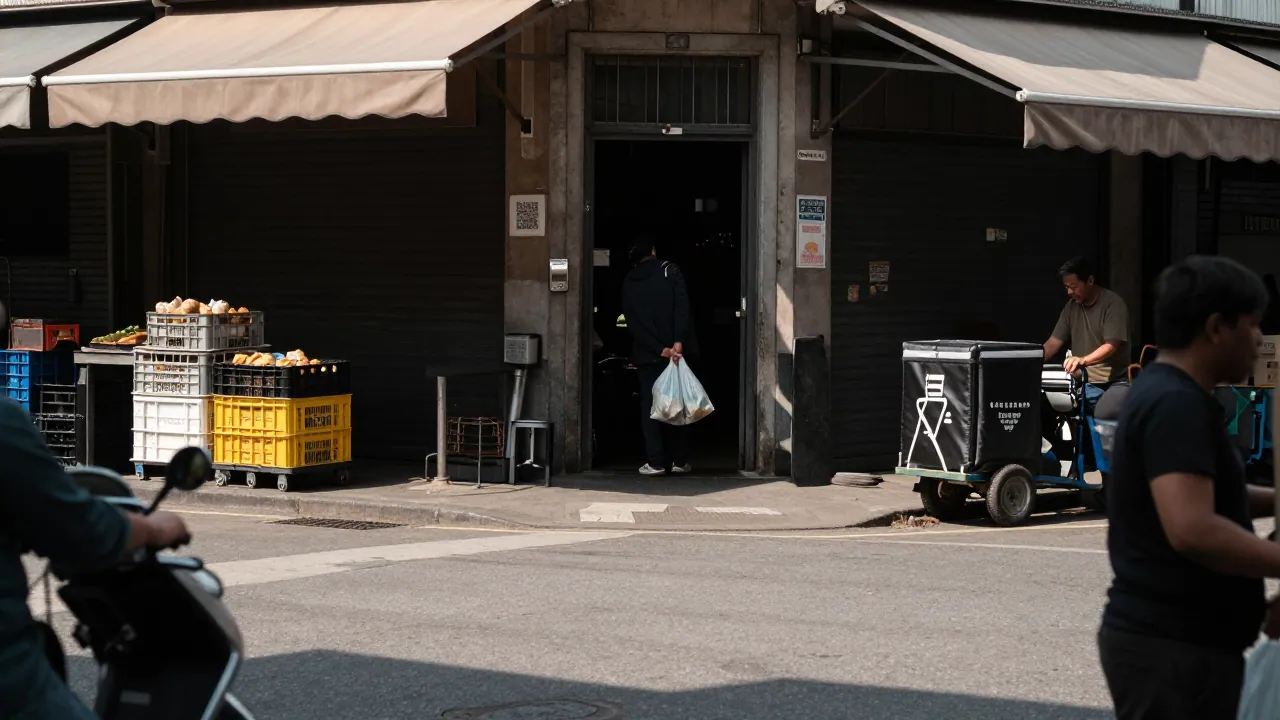
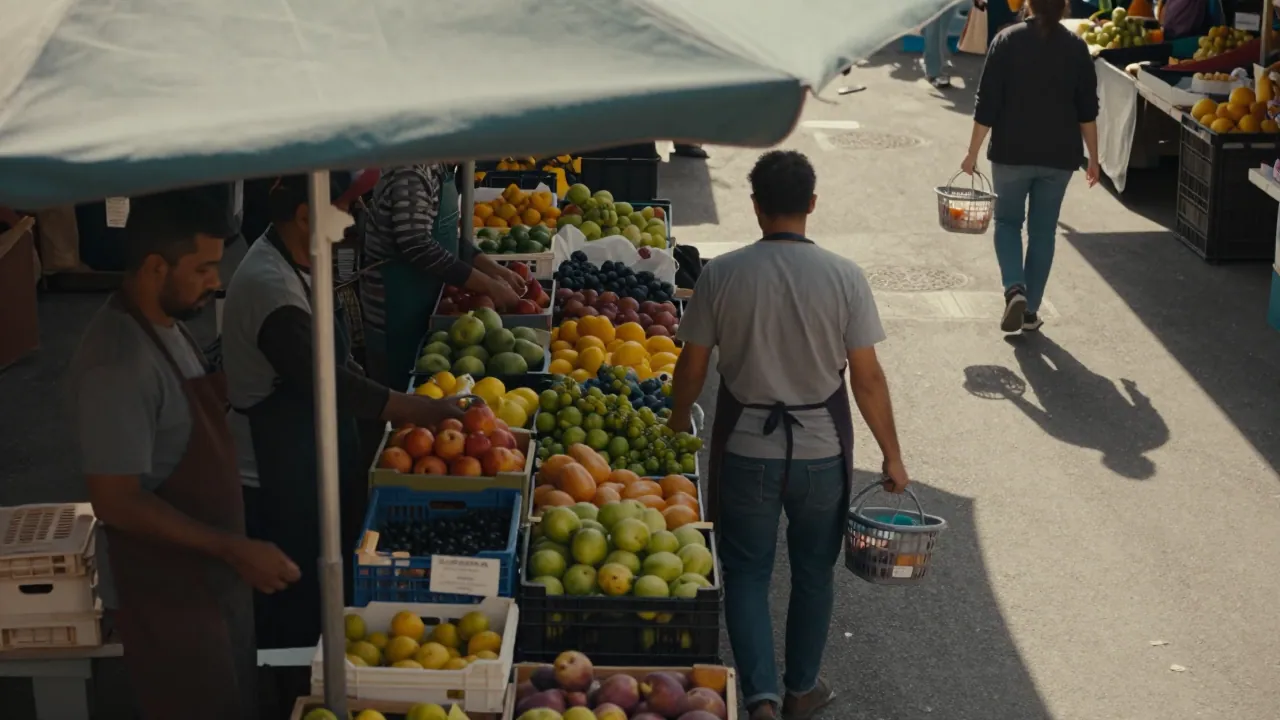
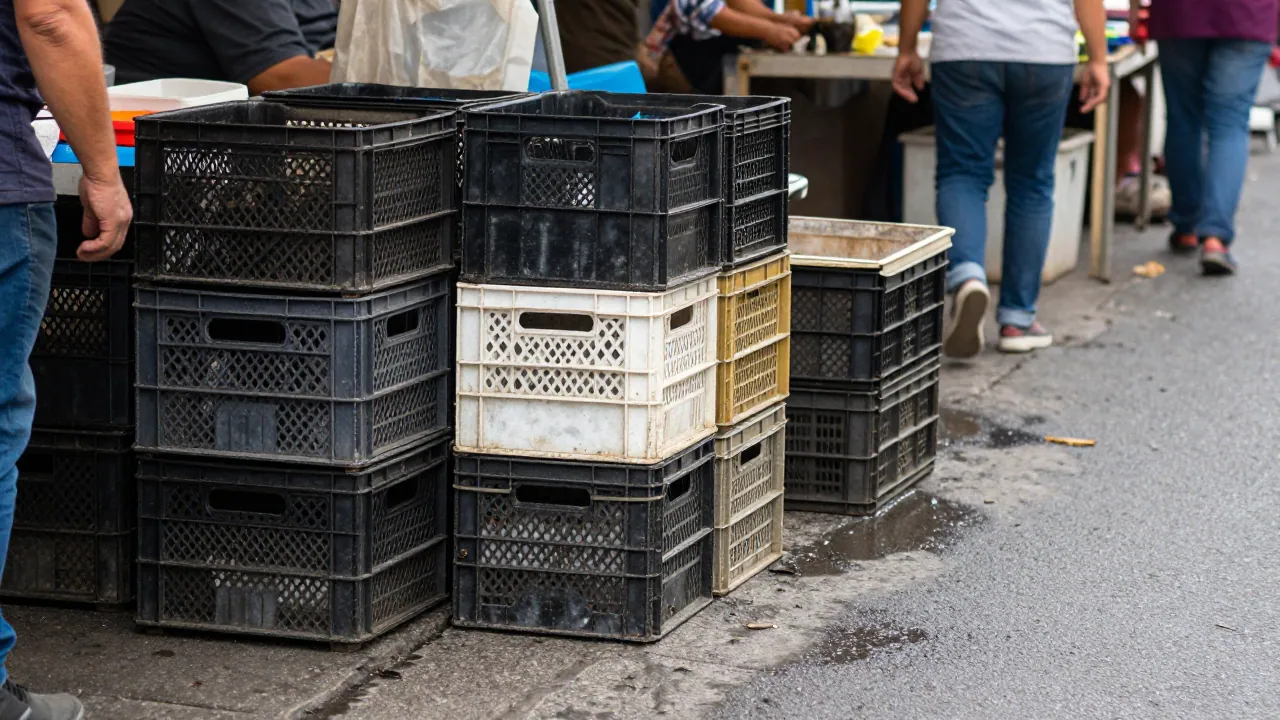
What we practice instead is choosing an anchor and letting it sit off-center. The anchor is simply the thing the picture is about: a face, a gesture, a color, a bit of text on a wall. Put it a third of the way into the frame, or near a corner, and see what the rest of the frame does. Often the background starts to work for you. This is close to what we look for on a market walk in Belleville: a stallholder's hands, a stack of crates, a customer turning away.
Exercise: the off-center walk
For twenty minutes, do not center anything. Pick a subject each time and place it deliberately toward an edge. Notice when the frame feels unbalanced and ask whether that tension is useful or just sloppy. Most people find that after ten minutes the habit loosens.
Habit two: checking the edges too late
The second habit is edge-checking, but at the wrong moment. People lift the camera, compose the middle, press, and only then notice a bright patch or a stranger's elbow at the border. The picture is already made. Edge-checking is not wrong. It is just too slow when it happens after the decision.
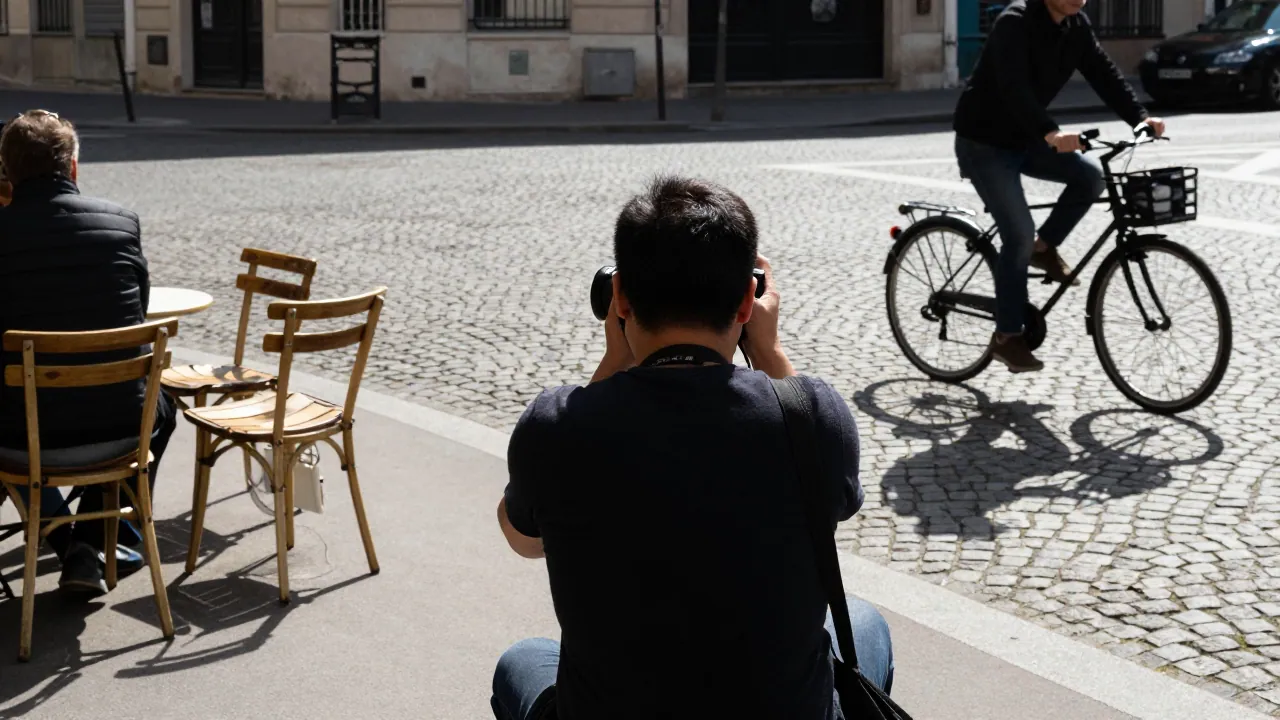
Instead, we practice a quick border scan before the camera comes up. While the camera is still at your chest, glance around the frame you are about to make. You are looking for two things: distractions that pull the eye away, and small gifts that add meaning. A passing bicycle, a hand entering from the side, a line of light on the pavement. If the gift is there, keep it. If the distraction is there, shift half a step.
Habit three: zooming instead of moving
The zoom is a wonderful tool and a terrible reflex. When something interests you, the first move is often to stand still and zoom in. That flattens the scene, removes the context, and makes the picture about the subject alone. It also stops the walk. You become a fixed point turning a dial.
What we practice instead is moving the feet first. Step closer, step back, step to the side. A fixed lens helps here, which is why we often ask people to tape their zoom at one focal length for an hour. You quickly learn how much of the frame is your decision and how much is the scene's. The walk keeps its rhythm, and the pictures keep their context.
Habit four: waiting for a clean frame
Many of us were taught that a good street photograph is clean: one subject, no clutter, no strangers drifting through. So we wait. We wait for the passerby to leave, for the delivery van to move, for the light to settle. Sometimes the wait is worth it. Often the passerby was the picture.
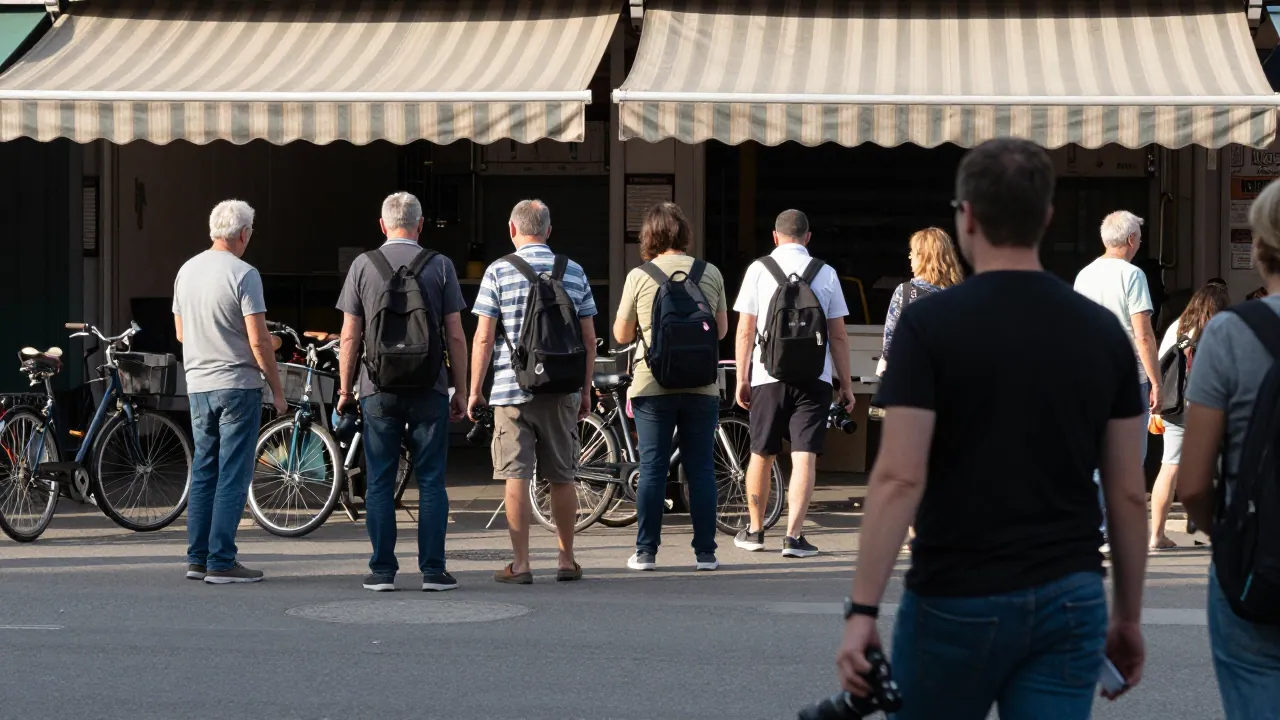
In the workshop we talk about honest clutter. A street is crowded. A market is crowded. A Sunday afternoon by the canal is crowded. If you remove everyone, you remove the street. What we practice is deciding which clutter belongs and which clutter interferes. A person walking through the background can add depth. A bright plastic bag can pull the eye away. The difference is not cleanliness. It is intention.
This is also where our conversation about ethics starts. When we photograph people, we try to be clear about why we are making the picture and what it says. That is a longer discussion, and it comes up on every Saturday photo walk.
Exercise: the one-frame rule
Choose a busy spot and allow yourself one frame per scene. No second chances. You will be surprised how often the first frame, made before the waiting reflex kicks in, is the one you keep.
Habit five: over-thinking the rule of thirds
The rule of thirds is a useful training wheel. It is not a law. When it becomes a checklist, people start moving the camera to satisfy a grid instead of responding to the scene. The result is pictures that are technically balanced and emotionally flat.
We practice three simple questions instead. What is this picture about? What is the second most important thing in the frame? Does anything else compete? If the answers line up, the composition is probably fine, whatever the grid says. This is the same thinking behind the winter light on Rue des Martyrs, where the frame is often decided by a shadow line rather than a grid.
| Habit | What it costs | What we practice instead |
|---|---|---|
| Centering everything | Time and surprise | Choose an anchor and place it off-center |
| Checking edges too late | Missed distractions and gifts | Scan the border before lifting the camera |
| Zooming instead of moving | Context and rhythm | Move the feet first; fix the focal length |
| Waiting for a clean frame | The picture itself | Decide which clutter belongs |
| Over-thinking thirds | Feeling and honesty | Ask what the picture is about, then press |
What stays with you after the walk
None of this is a system you have to remember perfectly. It is a set of small shifts. After a few walks, people often say the camera feels lighter, not because it is, but because the decisions are quicker. The walk keeps moving, and the pictures start to look like the street rather than a composition exercise.
If you want to see how these habits play out over a longer period, our notes on how our first photo walks changed the way we work are a good place to start. The workshop is free, and you can come with any camera, including a phone.
Questions people ask
Do I need a fancy camera for the framing workshop?
No. We work with phones, compact cameras, and film cameras. The habits are about seeing and deciding, not about equipment. A fixed focal length helps, but you can tape your zoom or simply leave it at one setting.
Is the workshop suitable for complete beginners?
Yes. Most people who join have never done a photo walk. We start with a short talk and keep the walk gentle. There is no critique of your pictures, only a look at what we noticed together.
How often do you run the framing workshop?
Usually once a month, outdoors when the weather allows. We announce the date on the walks page. There is no fee and no need to bring anything beyond a camera or phone you are comfortable with.