What We Look For on a Market Walk in Belleville
Two hours among the stalls and side streets, with notes on light, timing, and asking before you raise the camera.
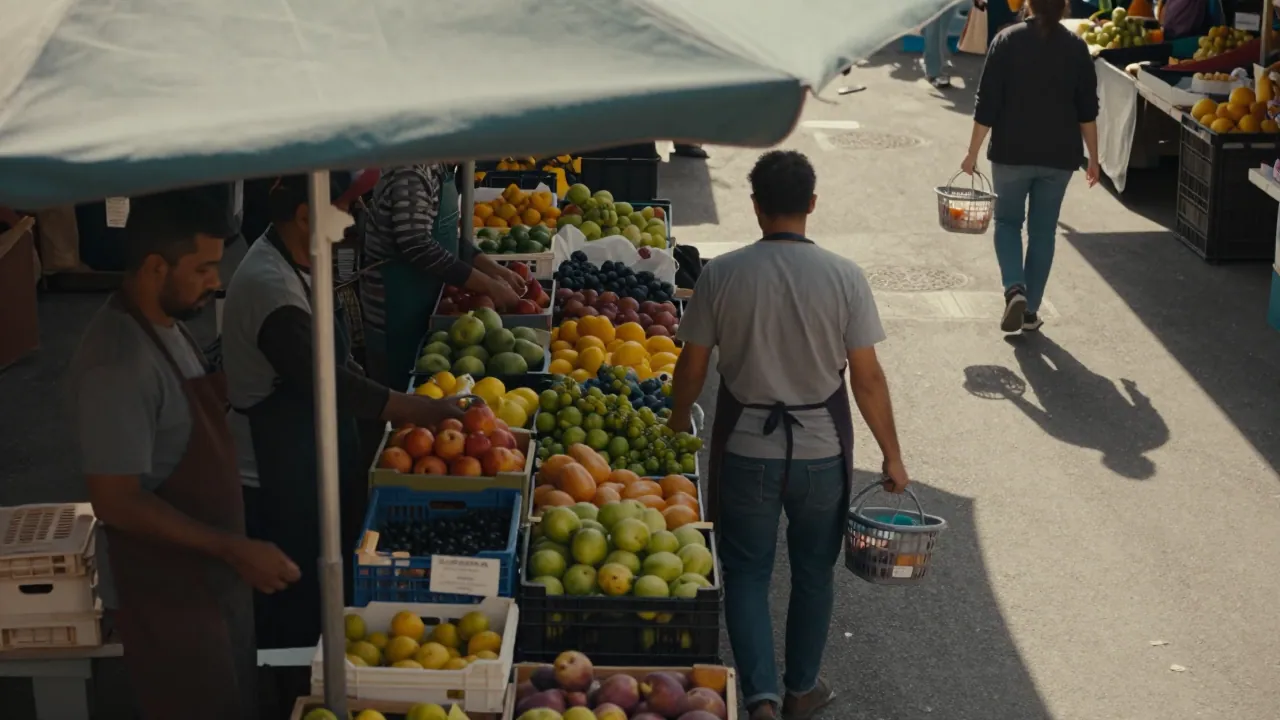
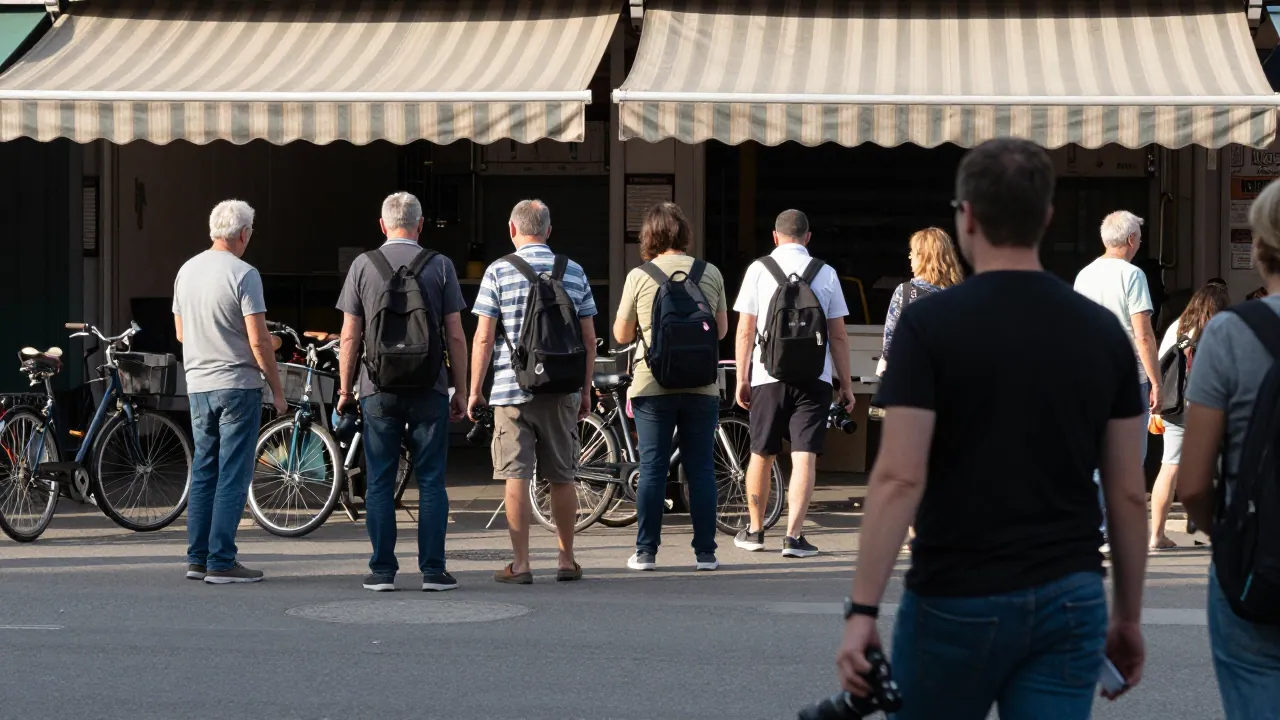
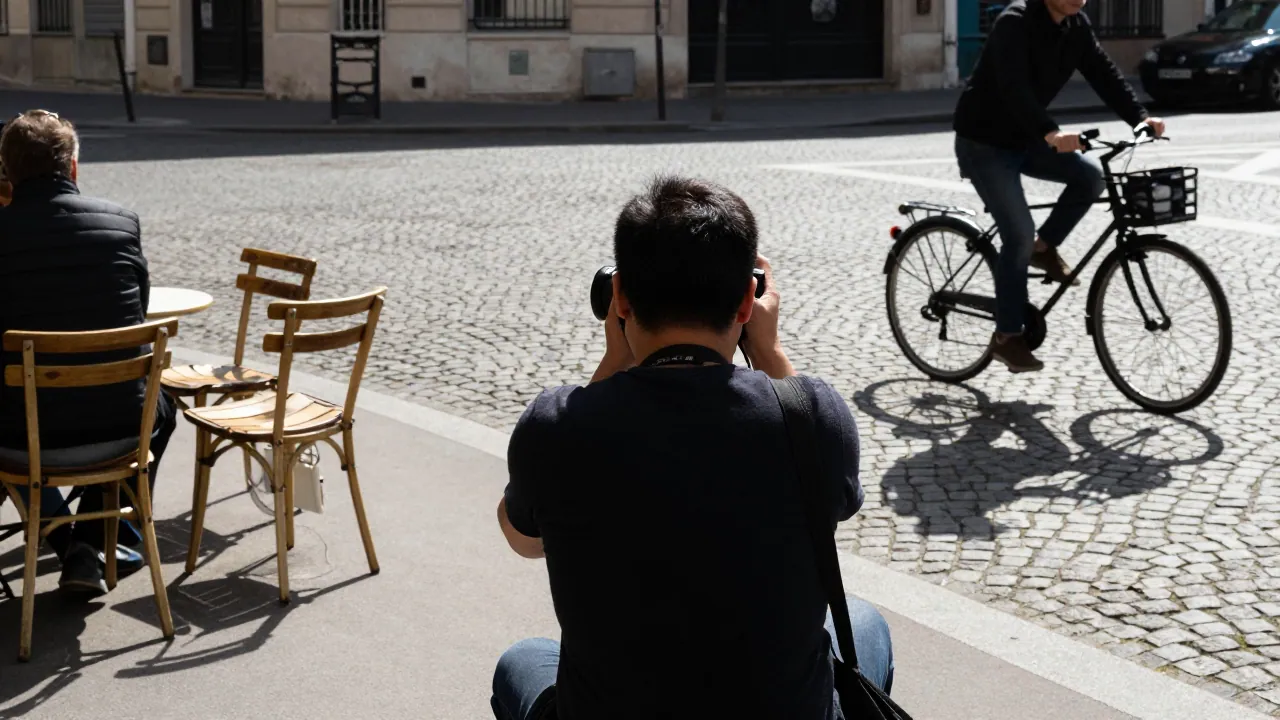
Belleville on a weekday morning is a good place to learn how a market walk works. The stalls along the boulevard are busy but not frantic, the light comes in low from the east, and there is enough room on the side streets to stop and think. We run this walk as a free two-hour session, usually starting around nine, and we keep the group small so there is space to talk. If you have never joined us, the format is simple: a short briefing, a slow loop through the market, then a pause to look at what everyone found. Before you come, it helps to know how to join a Saturday photo walk in Paris, though this midweek walk has its own rhythm.
Who this walk is for
This is a guide for anyone who has a camera they can carry for two hours and wants to photograph a working market without getting in the way. You do not need a big lens or a long history of street work. Most people who come are on their second or third walk with us. By the end you should be able to read a market row for light and flow, approach a stallholder politely, and leave with a handful of frames you actually want to look at again.
We meet at the top of the boulevard, where the market spills toward the side streets. If you are coming for the first time, the framing habits that slow you down article is worth ten minutes before you arrive; it saves a lot of standing around.
How the two hours run
We keep the shape of the walk the same each time. It is not a rigid schedule, but it helps to know where you are in the morning.
- Briefing, ten minutes: we stand back from the stalls, agree on where we will meet at the end, and talk through one or two things to look for that day.
- First loop, forty minutes: we walk the main row slowly, mostly looking, not shooting. The point is to see how the market moves before you join it.
- Side streets, thirty minutes: we turn off the boulevard and work the narrower streets, where the light is softer and the backgrounds are calmer.
- Second pass, twenty minutes: back to the stalls you noticed earlier, now that you know where people stand and when they turn.
- Review, twenty minutes: we find a quiet corner, look at a few frames on screens or contact sheets, and say one thing that worked.
The first loop is the part people want to skip. Please do not. The market tells you where the light falls and which stalls face the street. If you start pressing the button in the first five minutes you will spend the rest of the morning catching up. Reading a scene before you press is the whole skill, and we wrote about it in reading a street scene before you press the button.
Light and timing on the boulevard
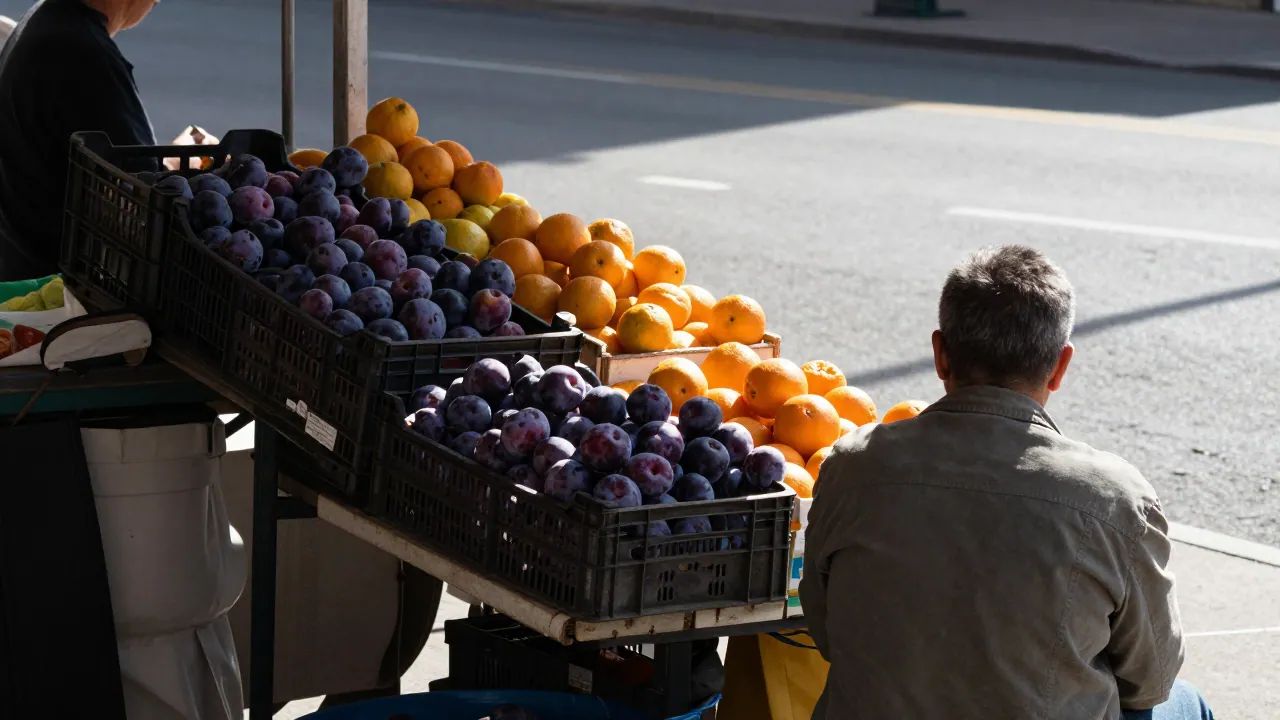
Belleville faces roughly east, so the morning sun comes in low along the row and lifts the fronts of the stalls. By eleven the light is harder and the shadows shorter, which is one reason we start early. On overcast days the light stays even and you can work the shaded side of the street for longer; we still meet at nine, because the market is busiest then.
Timing matters as much as light. The first hour is unloading: crates, trolleys, hands moving fast. The middle hour is selling: customers leaning in, vendors weighing and wrapping. The last half hour is quiet, with gaps between stalls and a chance to photograph the structure of the market itself. Decide which of those you want and place yourself there. If you are still learning to work in changing light, the notes from our winter walk on Rue des Martyrs apply here too, in a different season.
| Time | What is happening | What it is good for |
|---|---|---|
| 9:00–9:30 | Unloading, crates, trolleys | Movement, hands, early shadows |
| 9:30–10:30 | Selling, customers, queues | Faces, exchanges, colour |
| 10:30–11:00 | Quieter stalls, gaps | Structure, signage, empty space |
Asking stallholders, and the side streets
Most stallholders in Belleville are used to cameras and will say yes if you are quick and clear. Ask before the shot, not after. If they are serving a queue, wait until the queue thins; a vendor with three customers is not going to give you a useful answer. We have found that a simple question, asked once, works better than a long explanation. The people who sell here are at work, and the walk should not cost them time.
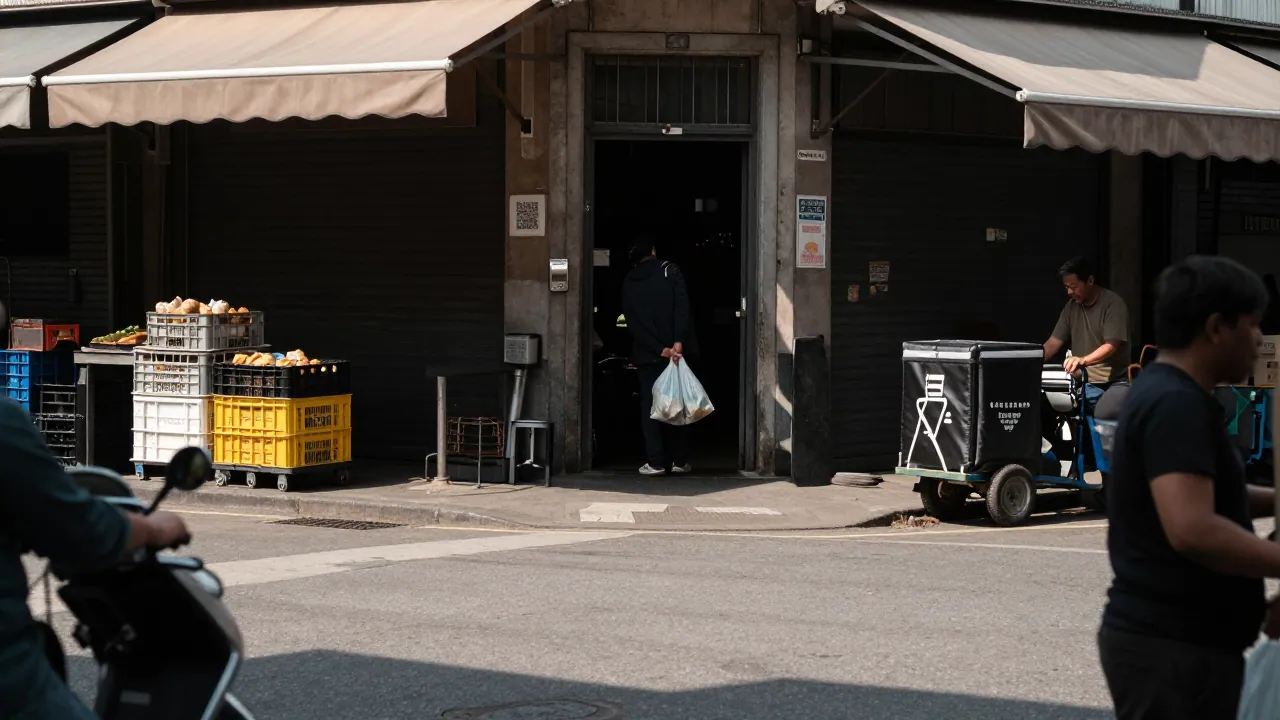
The side streets east and north of the boulevard are where the walk earns its keep. The light bounces between the buildings, the pavement is narrower, and there are doorways and stairwells that give you a frame within a frame. Walk them once without a camera to see where the light lands, then come back. We often finish the second pass on one of these streets rather than in the market itself. If you want a sense of how a quieter street changes across a season, our piece on where the 11th arrondissement gets quiet after Sunday lunch covers similar ground in another part of the city.
- Bring a camera you can carry for two hours, one lens is plenty.
- Wear shoes you can stand in; the pavement is uneven near the stalls.
- Carry a small notebook or use your phone for names and permissions.
- Bring water in summer; there is little shade on the main row after ten.
What we hope you leave with
By the end of the two hours we are not looking for a portfolio. We are looking for two or three frames that show you were paying attention: a hand, a reflection, a gap between stalls that someone else walked past. The review at the end is short and specific. We say what worked and what we would try next time, and then we walk back to the meeting point together. If you want to see how these walks have changed the way we work over the years, the first photo walks and what they taught us is a good place to start.
Questions people ask
Do I need to ask every stallholder before I photograph?
Ask when a person's face or hands are the subject, and always before photographing inside a stall. For wide shots of the market from the pavement, a smile and a gesture toward your camera is usually enough.
What camera should I bring to a Belleville market walk?
Any camera you can carry comfortably for two hours. One lens, somewhere between 28mm and 50mm, covers almost everything on this walk. A phone works too, and several people on recent walks used only a phone.
Is the walk suitable if I have never photographed a market?
Yes. The first loop is spent looking rather than shooting, and the group stays small enough that there is time for questions. Come ten minutes early and tell us it is your first walk.